Soda business sweetens downtown Huntington
How a small antique business evolved into one of the nation's largest specialty soda suppliers.
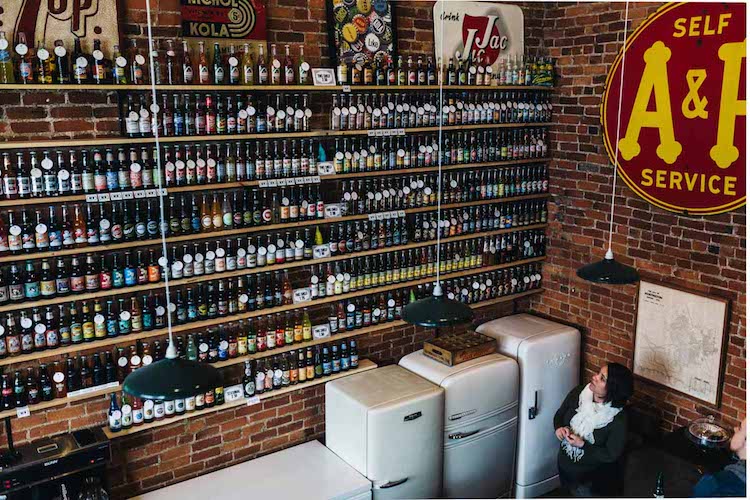
With more than 700 flavors of craft soda, Antiqology in downtown Huntington is one of the largest specialty soda suppliers in the US.
From root beers to crème sodas to sweet concoctions of all types, its shelves at 401 N. Jefferson St. are lined with labels from around the world, including 12 of its own creation and 15 on draft.
Last year alone, it sold roughly one million bottles.
But Rebecca Hanson, who runs Antiqology with her husband Adam and their two children, says the vision behind the store is less about soda and more about a love for Huntington and business itself.
Lifelong entrepreneurs, the couple wanted to start a business to invest in their growing downtown community only two blocks away from their house.
They began by selling antiques off their porch, and within a matter of months, their success enabled them to acquire a storefront with a soda foundation in 2013.
From there, the concept evolved into a full range of sodas, sundaes, milkshakes, and floats.
Hanson sat down with Input Fort Wayne to tell us more about her story, what it’s like being an entrepreneur in northeast Indiana, and what’s next for downtown Huntington.
IFW: Tell us about your personal background.
RH: I am originally from southern Indiana. Vincennes is my hometown, and I’ve lived in various parts of Indiana and Michigan.
I ended up moving to Huntington and attending Huntington University, and I met my now husband at the church we both attended.
The rest is history.
IFW: You and your husband, Adam, both had businesses before Antiqology. Tell us about those, and how they ultimately inspired the idea for your shop.
RH: Before I moved to Huntington, I owned by own cleaning business. I cleaned offices, and I had accounts with a lot of doctors’ offices and lawyers’ offices.
Adam has owned several businesses throughout the years. He started a BMW business in high school. It grew out of his passion for a specific BMW style car. The parts for it were very difficult to get in the US, so he found a connection in Germany and started importing them by the container load. Then he’d turn around and sell them to people who were passionate about the car like him.
He was still doing that some when I met him many years later. Then when we got married, and we manufactured and sold after-maker jeep parts. We had an online store with customers in 70 counties and thousands of products on our website.
We only had about a dozen customers in Indiana, so we spent a lot of time on the computer and on the phone or emailing. It allowed us to be at home when we had our son, so it was really nice, but we also felt this absence in our community.
We didn’t really know the people we were living around.
Adam grew up, born and raised in Huntington. But we felt like we were out of touch with the community we were a part of, so we were seeking way to become more involved and get to know the community better.
We were also passionate about seeing downtown revitalized. There was some forward momentum happening there, but we wanted to be part of keeping that going.
We were seeking out businesses we could run that made sense for Huntington, but would also provide the income we needed to support our family with two children.

IFW: How did you think of the idea for an antique shop with a soda foundation?
RH: We just brainstormed. We had always talked about ice cream.
When I moved to Huntington, there was one place to get hard scoop ice cream, but it closed. So we used to joke that ice cream was what we needed to do, and we thought a soda fountain would be cool.
We messed around with antiques, and people were really responding to our style in the things we would buy and sell.
So we decided we would pursue at least an antique portion of the business and be in a building of the downtown area within at least two years.
IFW: Where did you start?
RH: We started out of our home with antique sales on our porch, and it just went crazy.
Then somebody who owned a building downtown had a space they weren’t using, and they let us rent it as our incubator space.
About eight weeks after the original porch sale, we were there in that little space next to the theatre downtown for six months before we moved into our now current space.
Our plans and our goals fast-forwarded a lot quicker than we expected, which was awesome, but also overwhelming.
Once we knew we were moving into our first space, we started reworking our original business plan. Then we launched the ice cream and soda along with the antiques at our current space in 2013.
IFW: Tell us how the soda side of your business took off and became what it is today.
RH: We quickly saw the soda was really driving traffic, so we tried to alter our marketing and our strategies to reflect that we are more of a soda fountain place than an antique store.
We’re kind of an antique/gift shop. It’s not like your normal antique shop for your collectibles; we’re more home décor.
I think people like that old general store feel where you can have something to look around at and see cool old things, but also get your sweet fix.
We started with seven flavors of ice cream and 67 sodas in 2013, and we have progressed to now where we have 14 flavors of ice cream and about 700 varieties of soda.
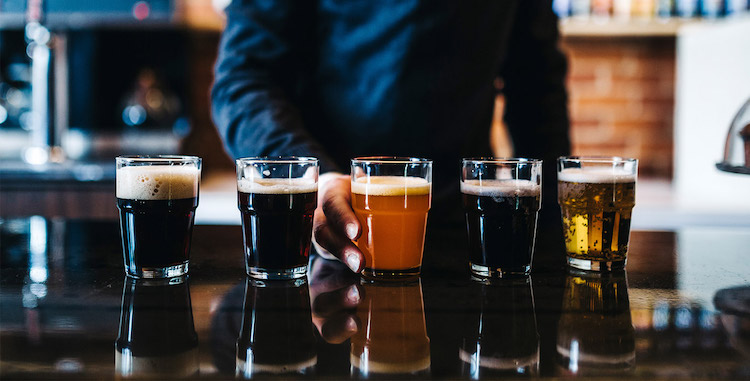
We offer three things on draft, but we have about 12 of our own flavors we offer on draft, too.
We have a nitro cold brew coffee on draft, and we still offer the 1919 Classic American Draft Root Beer people have been seeing from us from the beginning.
IFW: How did you find 700 flavors of soda? Are you passionate about soft drinks?
RH: Actually, neither one of us were extremely passionate about soda. It just became a competition.
Adam is very inquisitive. He likes to learn, and he’s really good about finding information. I didn’t think we would be able to find 30 sodas on draft. But he found 67 off the bat, and it just became a game of “There’s got to be more.”
He found bottlers; he has really driven that part of the business. He’s constantly in contact with bottlers, and they’re sending him stuff to sell. He’s always finding new things.
IFW: Along with selling soda by the bottle in shop, you supply restaurants and businesses with soda across the country. Tell us about that.
RH: We’re importing soda from all over the world, warehousing it in our 16,000-square foot warehouse, and then selling that all over the nation.
Adam handles the warehouse and distribution side of the business, which has taken off gangbusters over the last year and a half.
We have accounts all over the nation. We’re distributing to mom and pop shops, breweries, wineries, other ice cream places, and just little shops all across the US that want to have that variety of sodas.
We warehouse everything we carry, so we are a distributor for many brands.
IFW: With 700 flavors to choose from, how do you pick? What is the most popular?
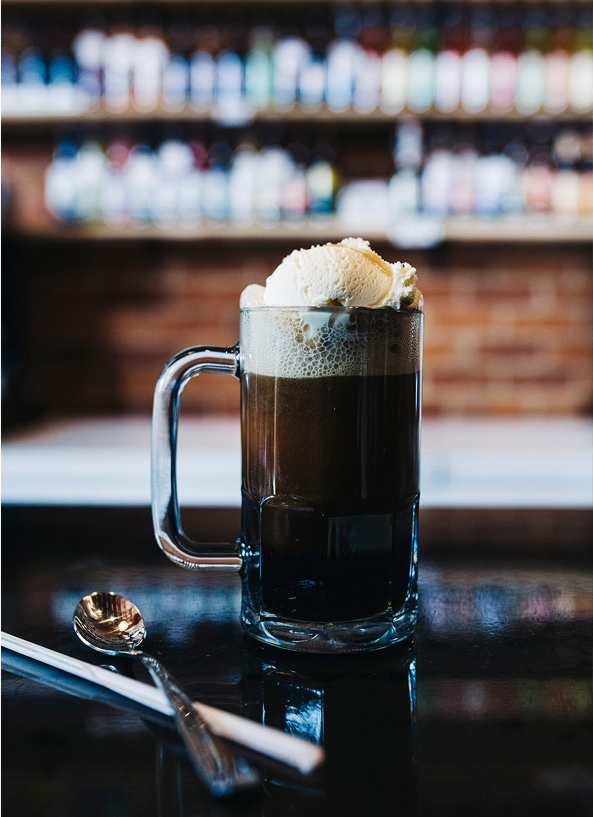
RH: The most popular flavor of anything and everything that sells is root beer. Across the board, it’s generally the best-selling flavor.
We have more than 100 root beers alone, so by sheer volume they outsell the rest.
Within the root beer family, there’s a butter scotch that’s popular, a caramel root beer, a root beer that’s heavy on the bite, or the mintiness, or herbal, or extremely creamy and vanilla flavored.
We have our own root beer that is bottled, too, and that is our best-seller.
Root beer is one of those iconic drinks that people of all ages remember drinking growing up, or having a root beer float.
That being said we have 600 other things that are popular, too. We have fruity things and crème sodas, and diet options for people with diabetes.
Some people want the same thing every time, and others want to try something different every time, so they never have the same soda twice.
IFW: It can be difficult to make a niche small business work. How would you describe your experience as an entrepreneur?
RH: Entrepreneurs in and of themselves are a different kind of person.
I think generationally, across the board, an entrepreneur is someone who has always thought failure is not an option. I have to adapt. I have to make it work. I have to figure it out, and that is why some entrepreneurs are able to be so successful.
Our livelihoods depend on our success. Not anyone else’s.
Before we started Antiqology, we didn’t know anything about soda, so we figured it out and learned.
How do you go from not even knowing that many sodas are available to making your own soda?
You learn. You make your own destiny. You’re not waiting for someone else to do it for you; You do it.
That’s the approach we’ve taken with our downtown, too.
We’ve followed in the footsteps of people who have worked very hard, and if we want to see something done, we have to be the ones who do it.
IFW: You seem like big supporters of downtown. What is the area and atmosphere like?
RH: We’ve had some highs, and we’ve had some lows.
Huntington has a history of manufacturing. That was the backbone of the community. We had a Breyers factory here, and when Breyers left, that took a lot of good paying jobs.
I think sometimes people see those things, and they think Huntington is dying.
Those of us who are involved, we see that, yeah, we’ve had those hits, but we also have some of the best people in economic development who are passionate about building jobs and bringing jobs here.
Breyers left their building, and within a year, it was back up and running with another company.
I feel good about what’s happening here.
When you are someplace all the time, you really lose track of how great it is. We get so many people who visit from out of town, and they are so complimentary and appreciative of what we have going on in downtown Huntington.
Right at the gateway of our downtown, there’s this beautiful park with a fountain and a clock and a really nice corridor.
It’s like old time Americana. It’s like a flashback in history. It’s a neat place.
IFW: What would you like to see in Huntington’s future?
RH: Adam and I would really like to see Huntington kind of take a step back and look at who we’ve been, who we are, and who we could be as we deal with the loss of industries.
I think that as time progresses, you have to look at what era and what time we are in, and just as the railroad replaced the canal here, we have to be able to move forward with what’s next.
Time changes everything, and we have to be able to adapt.
Adam and I are really excited about some of the things we see happening in Fort Wayne.
We are a 20-minute drive from all that, and we look at the places surrounding cities like Indy, and see how success has spilled over into those communities. We think if we plan things right, we can take advantage of the success in Fort Wayne here.
But that is a different way of thinking, and sometimes change Is hard for people, so we try to remain as positive and forward thinking as we can.
IFW: What’s next for your family and Antiqology?
RH: We’re always up to something.
We actually have some things on the horizon that are yet to be publicly disclosed, but one of the things that we have said from the beginning is that we would like to be bottling our own soda onsite, so a bottling line is definitely on the top of our list of wants, and something that we are very serious about.
That would bring a whole different part of the business where people could watch it being done.
It’s an attraction, and it broadens our reach to bottle for other people.
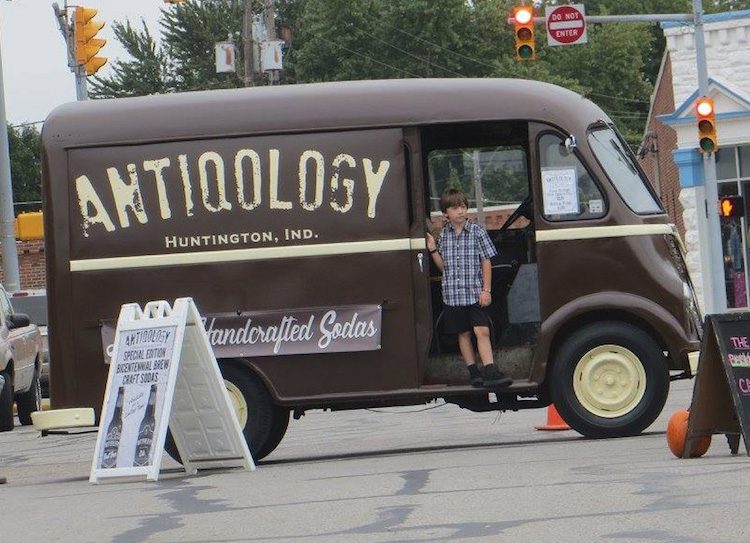
Right now, we have a cute little vintage international metro soda truck, and people love it for events and festivals. We’ve had a lot of fun with that. That was one of our goals two years ago.
But we’ve got several things in the works right now, for Antiqology and other things.
More good things for downtown Huntington—new things, different things.
Author

Related Articles
What’s it really like to live in downtown Fort Wayne?
Three residents share perspectives on the good and bad of downtown living.
#PlacesofNEI: Sunrise Mart in the North Anthony Neighborhood
Sunrise Mart is a neighborhood grocery store that offers a wide selection of fresh produce, meats, dairy products, and pantry items.
Memorial Park Neighborhood is banding together to bring pride, identity, and community back
“This is the chance for the neighborhood to help establish a sense of pride and identity. And then to also let both residents and visitors know that they're inside of a neighborhood that's active and well cared for and has leadership working hard to establish the association and build up residence.”