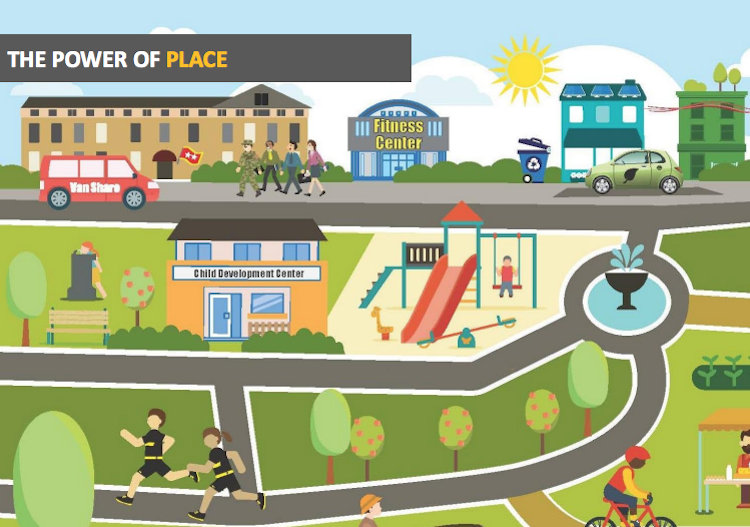
The power of place: Why your city’s built environment has a bigger impact than you might think
Fort Wayne architect Zach Benedict shares insights on the connection between people and the places they live and invest.
As Principal of MKM architecture + design in Fort Wayne, Zach Benedict stands in front of a crowd of Midwest city planners, presenting the keynote speech at a 2019 conference for Main Street organizations in South Bend, Ind.
The topics of the conference are your usual suspects: Downtown development, public art, talent attraction, and the like. But in Benedict’s keynote, he’s talking to city leaders about something more personal and sacred than that.
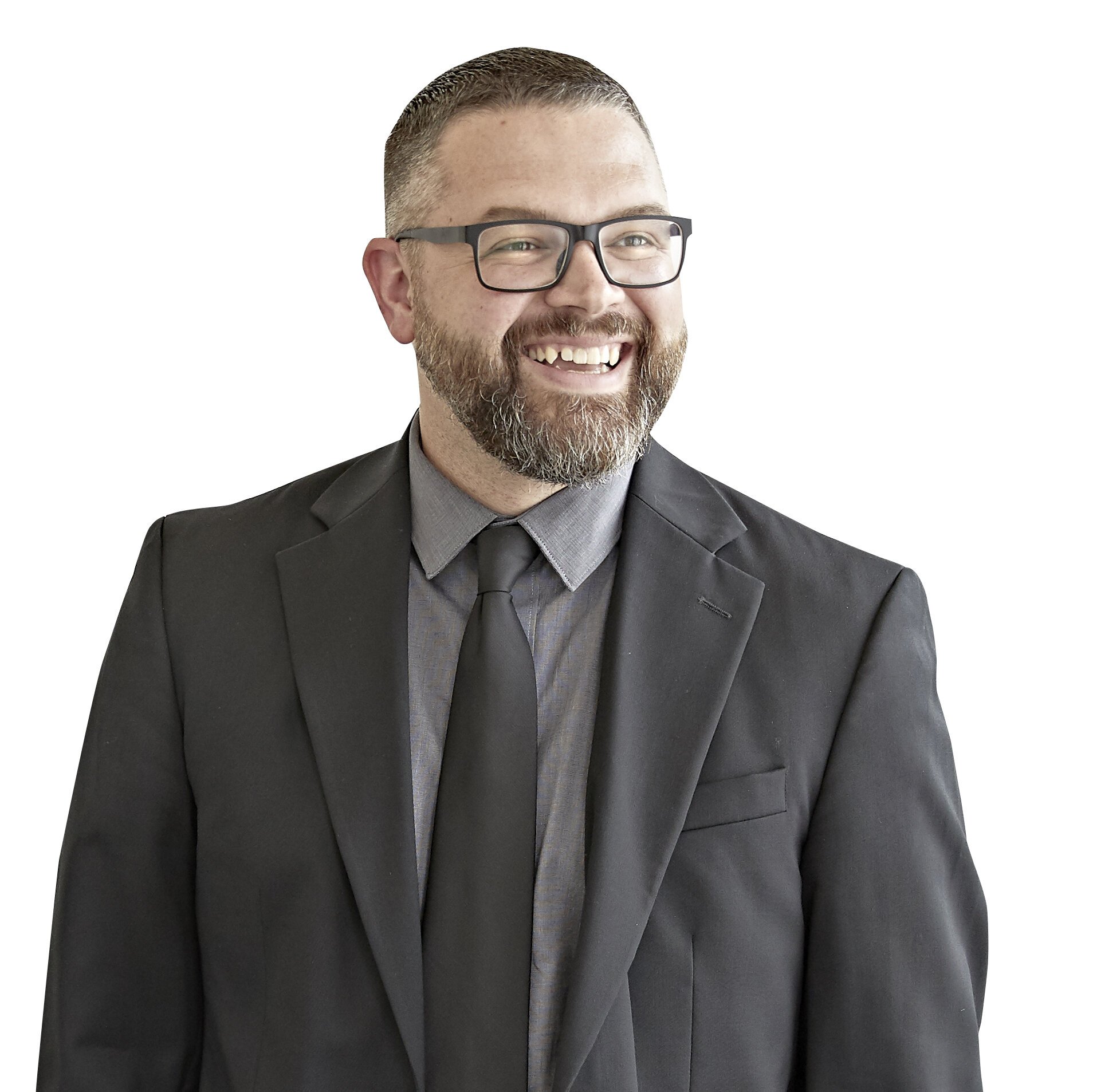
He’s talking to them about love. More specifically, how in 2015, the Gallup-Sharecare State of American Well-Being study found that Fort Wayne—out of 190 cities—reported the lowest level of “social wellbeing” or people who said they “have love in their lives.”
“It’s a depressing realization,” Benedict says, reflecting on the results.
While he admits that the city’s rating has gotten better in recent years—and by some measures, Fort Wayne is among the happiest cities in the nation—he thinks the Gallup poll presents an important indicator for architects, city planners, and anyone interested in attachment to place.
While part of the city’s reported “lack of love” may just be good, old fashioned Fort Wayne humility, there’s still a sizable portion of residents who report feeling essentially “alone.”
“Another way to look at this lack of love is to see it as the side effects or consequences of loneliness,” Benedict says.
It’s why he and others at MKM are interested in working on projects like senior living centers and walkable urban developments, such as The Landing, that bring people together by design and provide them with the human interaction they so desperately need—but don’t consciously seek out.
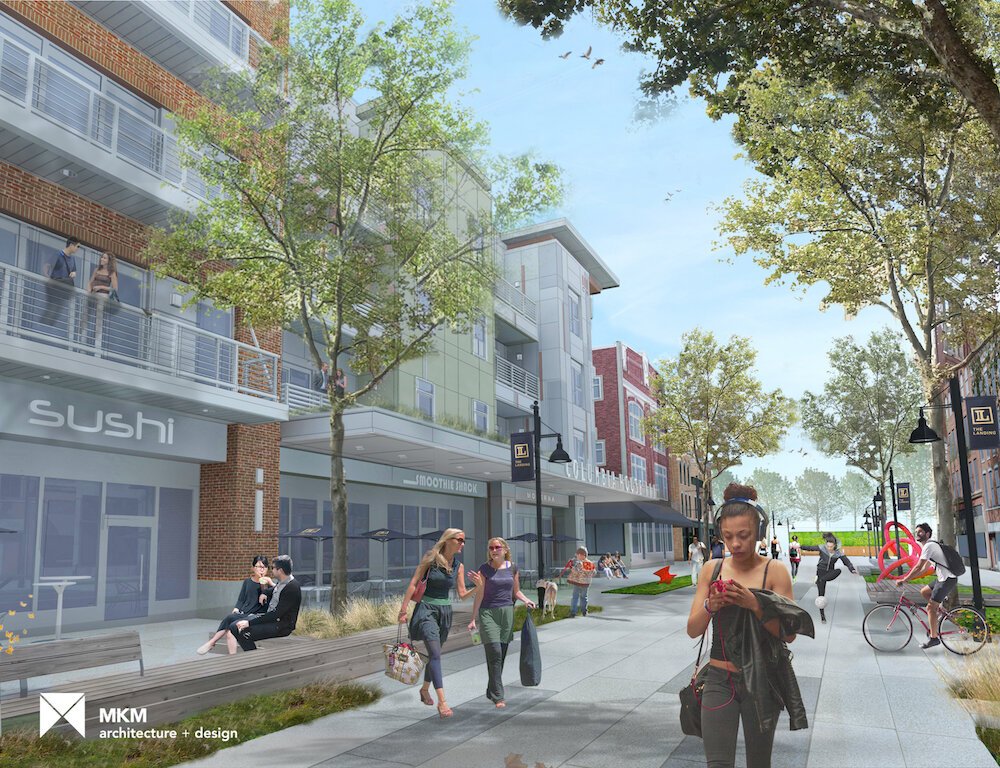
They’re looking for ways to address issues at the heart of discontent in Midwestern communities—to help people live more naturally integrated and relational lives by changing their built environments.
“We can’t necessarily help people love each other more, but we can help people live less isolated lives than they have been living,” Benedict explains.
It’s a sentiment that hints at a different way of thinking about what attaches people to places. When we talk about the value of a place, we often consider traditional variables like jobs, economics, and safety.
But what if attachment boils down to things that are deeper and more fundamental than that. What if when we’re talking about the value of a place, we’re actually talking about how well its social systems are designed to help people engage and interact?
What if we’re actually talking about purpose and love?
“The problem is not usually what you think it is,” Benedict says. “It’s almost always something else.”
What is love? (when it comes to place)
Across the U.S., there’s a growing number of people who select where they live based on their connection to a place.
In other words, when people are looking for a place to live and invest, they’re often looking for love. This trouble is, this deep and complicated notion of love often gets confused with more fickle feelings when we start benchmarking how happy people are in a place, Benedict explains.
For instance, in a study that rates Fort Wayne the No. 3 happiest city in America, one of the top indicators of happiness studied is economic prosperity, which doesn’t necessarily ensure attachment or emotional wellbeing, he notes.
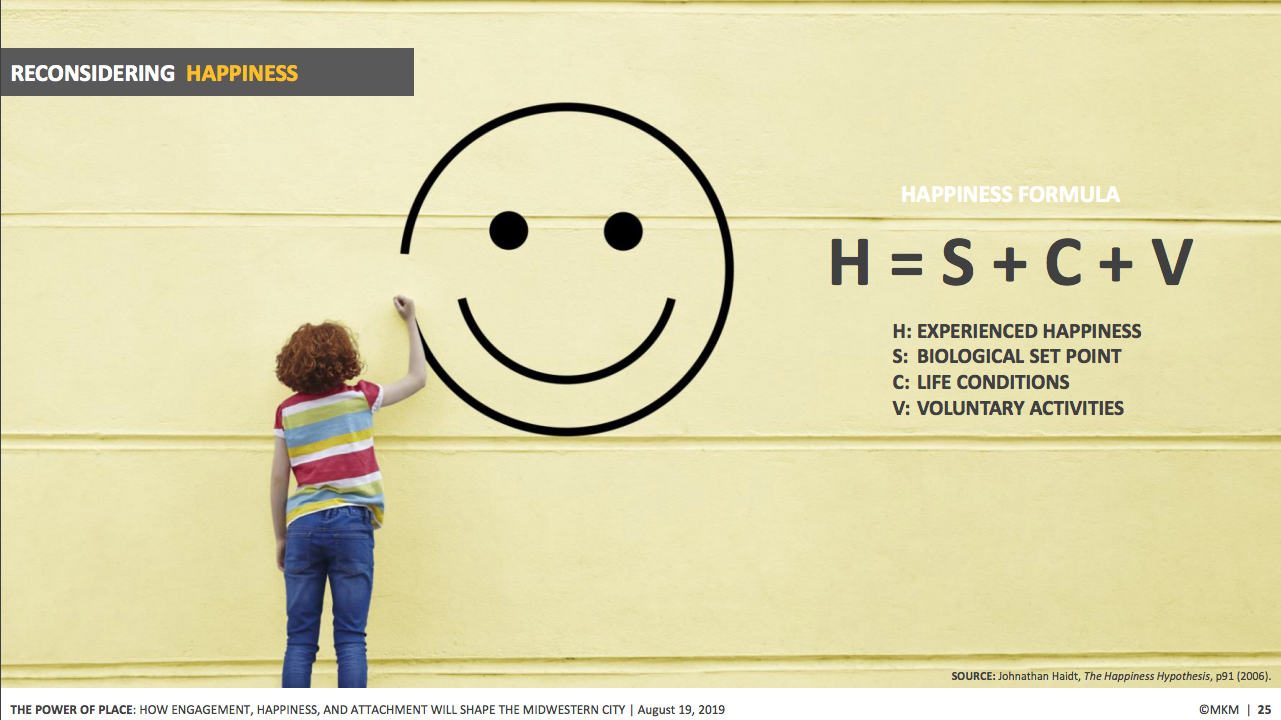
Wellbeing is also commonly misconstrued as Midwestern joy and friendliness, “smiling all the time,” Benedict says.
But he thinks there is a deeper way of looking at how people feel about their communities.
A few key indicators are outlined in the Knight Foundations’ 2008 launch of the Soul of the Community study, which found that successful cities consistently prioritize community attachment in three categories:
- Social Offerings: Places for people to meet each other and the feeling that people in the community care about each other.
- Openness: How welcoming the community is to different types of people, including families with young children, minorities, and talent.
- Aesthetics: The physical beauty of the community including the availability of parks and green spaces.
While the equation for community engagement is complicated, the result is simple: People’s happiness in a place is directly linked to how engaged they feel in that place.
“It’s more about providing a sense of purpose and value,” Benedict says.
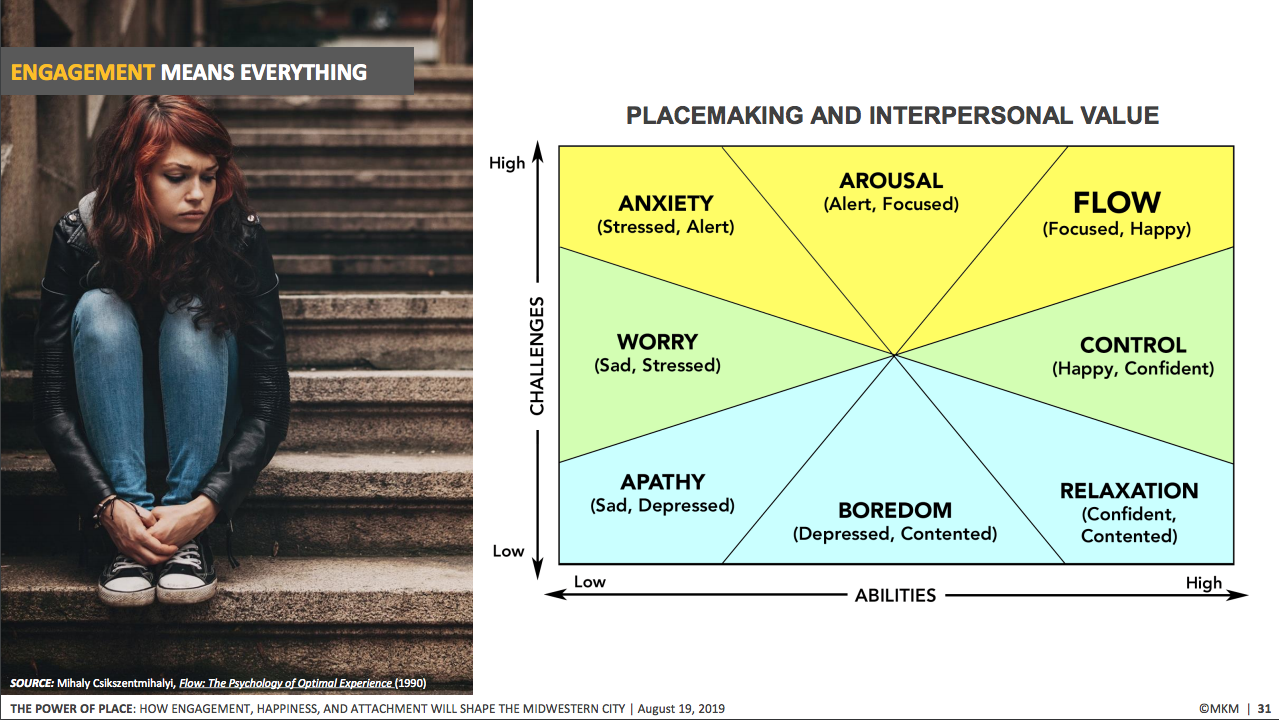
For instance, when people are deciding what a place means to them, they’re often asking: “How can I add value to this community, and how is my value being reciprocated?”
The ways they answer these questions will, in part, determine how engaged or attached they feel there—and how happy that place makes them as a result.
“If people feel highly engaged in their community, they tend to score off the charts in happiness, regardless of how engaged they actually are,” Benedict says. “To me, that says what’s key from an economic development and community standpoint is people’s perception of their value within a community.”
However, since the post-World-War-II-era and auto industry boom, achieving this perception of value and community connection in cities has been a challenge—particularly in small, Midwestern towns.
In his groundbreaking book Bowling Alone, Robert D. Putnam chronicles the trend as the “collapse of American community,” drawing on evidence from nearly 500,000 interviews in the past 50 years to show how social capital has plummeted nationwide—and how it might be restored.
So what changed to trigger this loss of perceived value and community engagement in cities, and how can we get it back?
Among other things, it comes down to the physical environment, Benedict says.
What’s wrong with suburbia?
Before the suburban sprawl of the 1960s, many places were once highly accessible on a human scale, with walkable streets or public transit that serviced mixed-income, mixed-housing neighborhoods. American communities largely functioned on a “general store” or “Mom and Pop” mentality, drawing citizens into a collective social network that utilized and depended on centrally located goods and services.
However, with suburbanization and popularization of the personal automobile came a new, “suburbanized” or “Big Box retail” development model, which decentralized the city’s social network into destination events and isolated exchanges, Benedict explains.
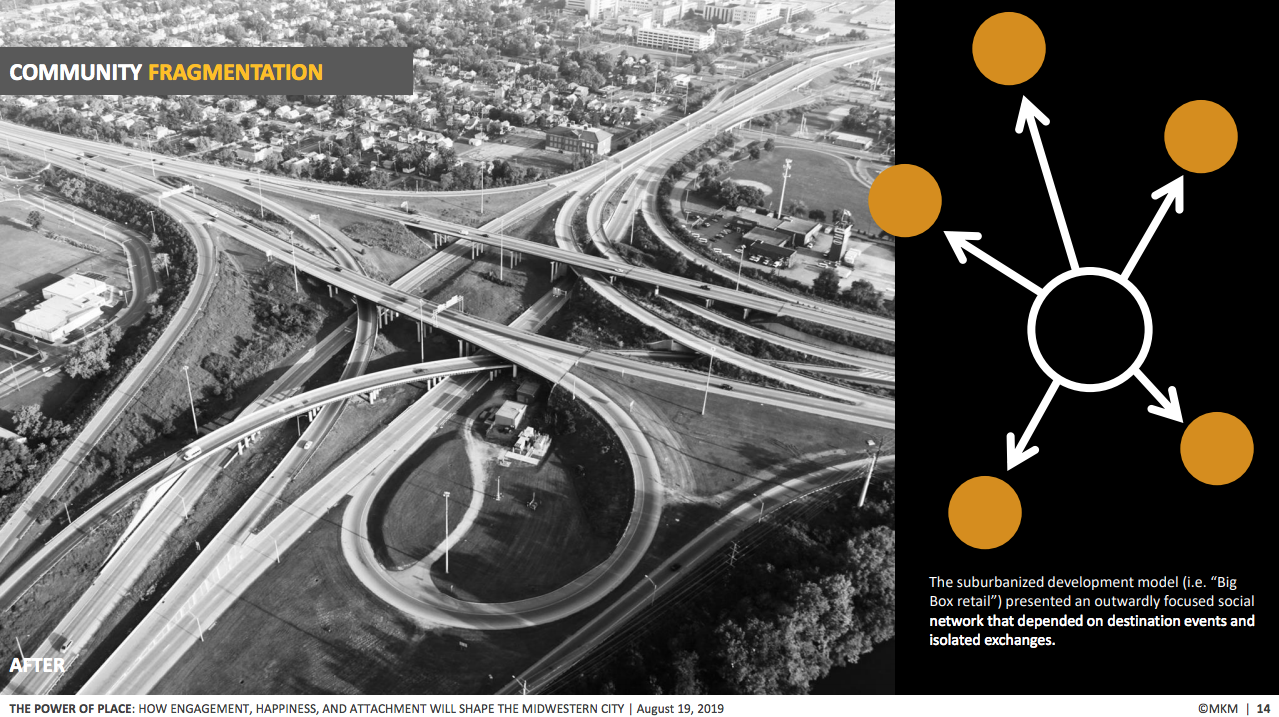
Coupled with other issues like redlining and racism, suburbanization contributed to segregation and fragmentation in cities. Downtowns became ghost towns, and while some parts of the city thrived, others suffered.
“Like an epidemic, a new behavioral model transformed our social patterns and, as a result, radically altered our health,” Benedict says.
That’s because people’s behavior and health are largely impacted by their physical environment, too.
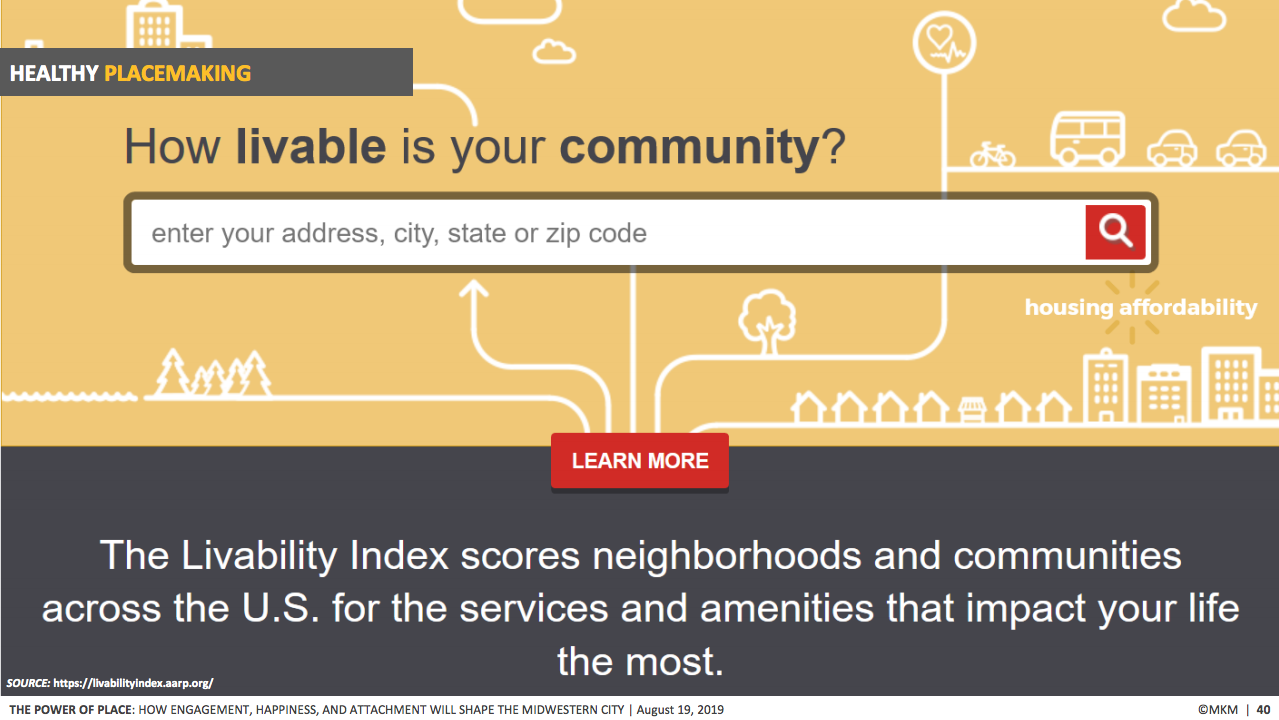
In 2018, the National Center for Health Statistics released its first neighborhood-level data on life expectancy, which shows that life expectancy varies greatly at the census tract level, from block to block.
This means that while we often think of personal health as the most accurate predictor of people’s lifespans, another predictor exists: Their zip codes.
By the way cities have been designed, some places are more conducive to wellbeing and health than others. And the problem is exacerbated in places like Allen County, which is home to both the highest and lowest levels of poverty in the state in two zip codes a mere 11 miles apart.
While access to quality healthcare is part of the reason for health disparities among zip codes, bigger issues are access to the types of conditions that help prevent poor health in the first place, including nutritious foods, good schools, affordable housing, and of course, relationships with other people.
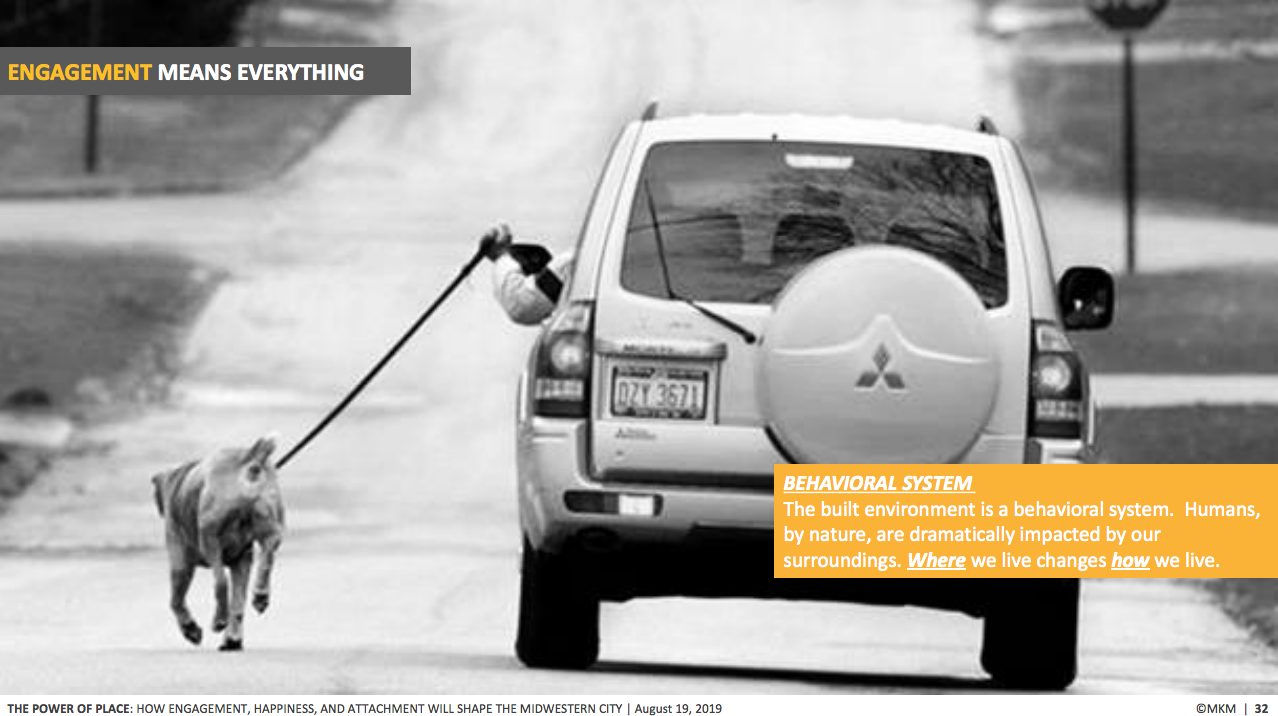
At its core, the built environment is a behavioral system, Benedict explains, and humans, by nature, are dramatically impacted by our surroundings.
In other words, where we live changes how we live.
“I shouldn’t be able to predict your life span based only on your zip code, but I can,” Benedict says. “I shouldn’t be able to map loneliness in communities, but I can.”
For him, this realization comes with a responsibility for architects and city leaders who are technically responsible for designing communities with the inequity they bear today.
As an architect, Benedict is working to make a difference on these fronts by changing people’s built environments with thoughtful developments that take community and social wellbeing into account, and he’s pushing other city leaders across the Midwest to do the same.
“If we are to survive the coming demographic shifts, we must acknowledge the connection between place and quality of life,” Benedict says. “More importantly, we must envision how our shared downtowns can exist as incubators for inclusive placemaking strategies.”
One way he envisions doing this is by leveraging highly accessible third spaces like libraries to bring communities back together by providing services and offering space and events for chance encounters.
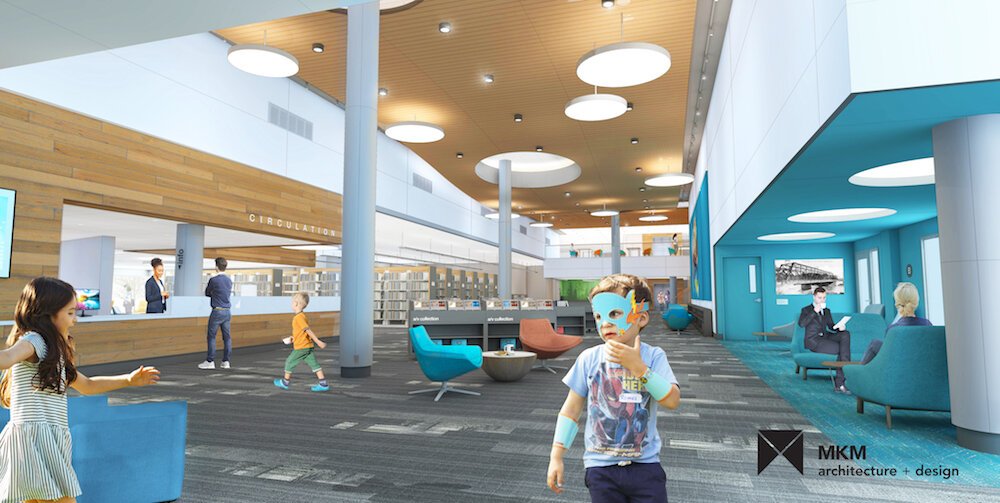
As more architects, designers, and leaders across the Midwest start considering inclusive placemaking strategies, there’s more opportunity to make a difference.
“I’ve been telling people for years that all the bad things you’ve been hearing about suburbia are the result of some pretty thoughtless decisions made by architects,” Benedict says. “If we could have that much impact when we were being thoughtless, imagine what we can do if we were being thoughtful?”
Join the conversation
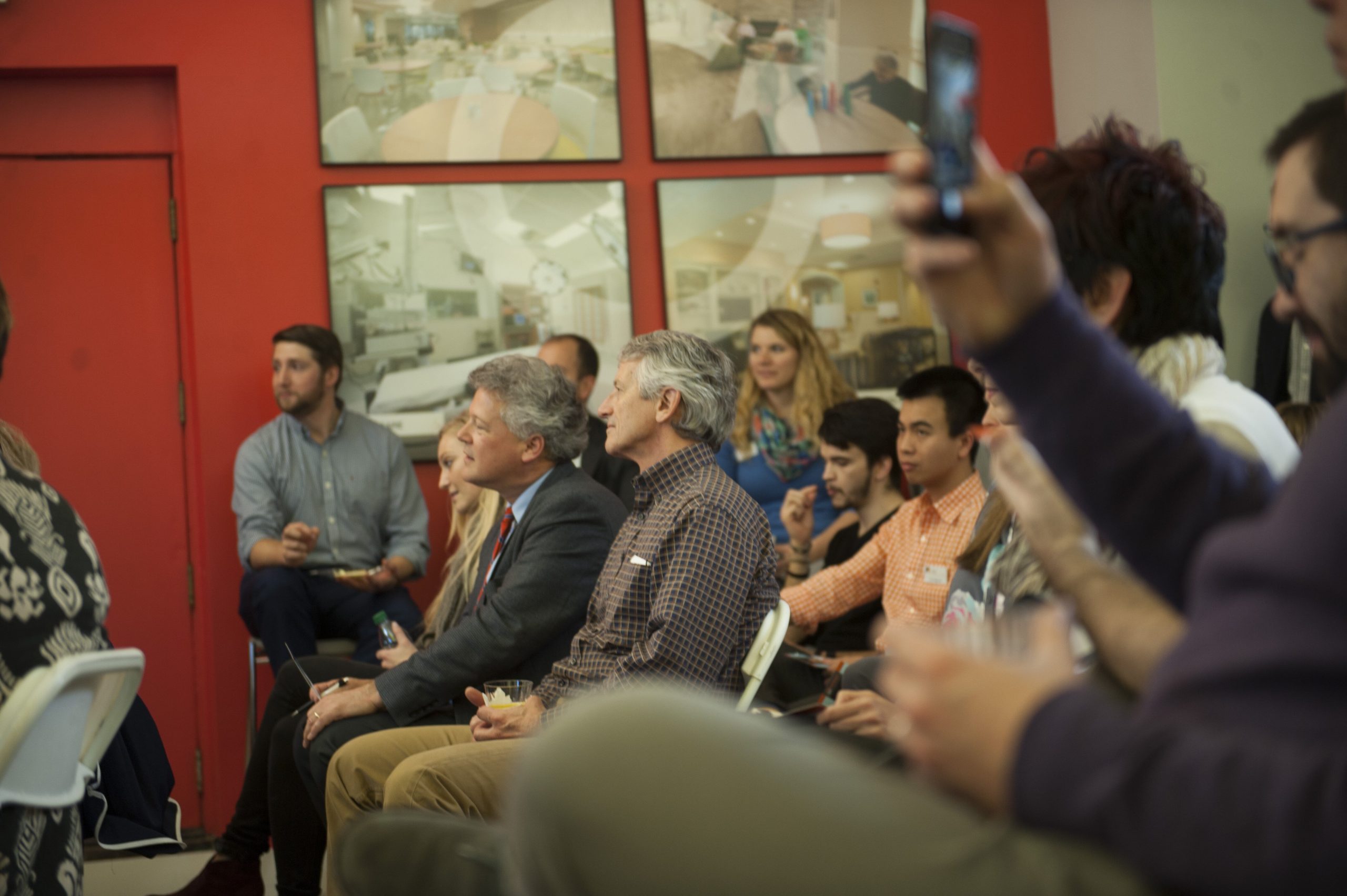
Along with its work as a full-service architecture, planning, and interior design practice, MKM hosts free community conversations throughout the year at its downtown Fort Wayne office.
These events, known as Fishbowl, started as a way to introduce its team to friends of the firm, Benedict explains. Then, a few years ago, they decided to open them up to the public for anyone who wants to learn about community health, well-being, and other thought-provoking concepts.
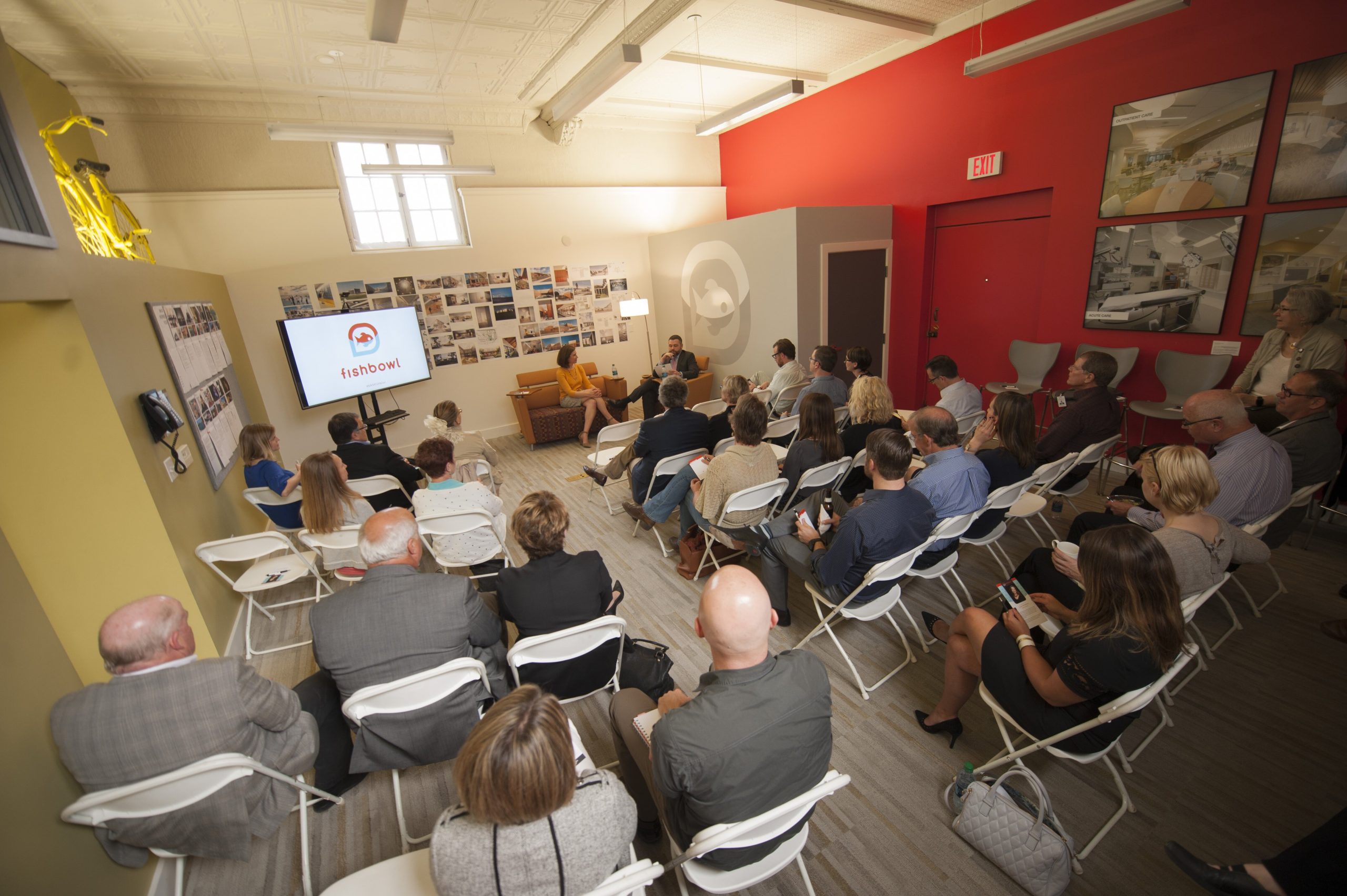
While the events are free, the audience is capped at 45 attendees (RSVP online) due to office capacity, Benedict says, and having an intimate space to talk serves another purpose, as well.
While Fishbowl events follow the typical setup of a question-and-answer session, the questions Benedict asks often deviate from the usual topics of core business models or elevator pitches, he explains.
Instead, Fishbowl is intended to provide a safe space for speakers to talk about the ideas that keep them up at night, their doubts, and the things they haven’t figured out yet in work and life. The talks aren’t recorded in web videos or blogs, so speakers have free reign to get as creative and authentic as possible with their live audience.
While the speakers, dates, and topics of future Fishbowl events are announced on MKM’s website and social media, Benedict has one word of advice: Come expecting to be surprised.
“I don’t think anybody has talked about what people think they’re going to talk about,” he says.
Attend Fishbowl
The next Fishbowl is Tuesday, February 18, from 3:30–5:00 p.m. at 119 W. Wayne St. in Fort Wayne.
The speaker will be Zach Benedict’s brother, Jacob D. Benedict, who is Partner and Director of Research at AMI Investment Management.
Learn more, and RSVP on MKM’s website.
Author

Related Articles
Help shape future coverage – join our upcoming listening session
Join Input Fort Wayne at Tall Rabbit for coffee, conversation, and a chance to share the issues, people, and neighborhood stories you think deserve more attention.
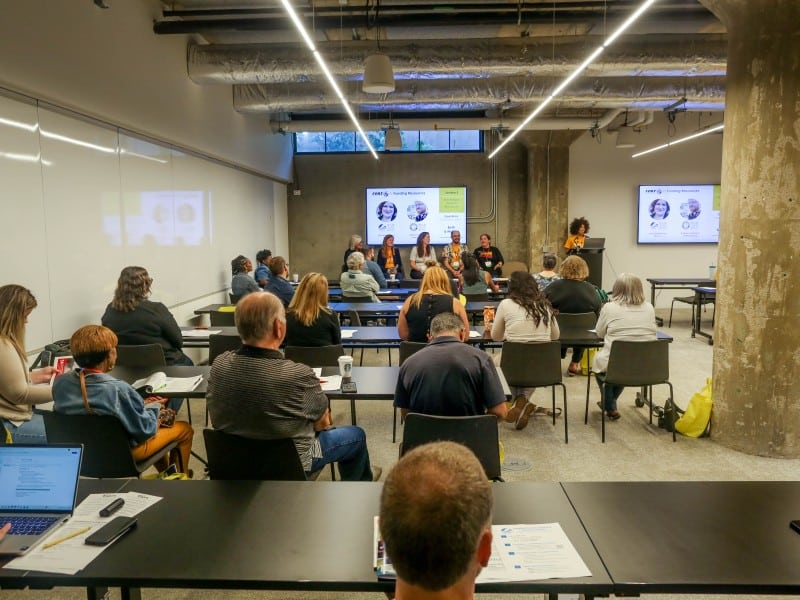
Partner Partner Content Bringing neighbors together: Q&A with Réna Bradley on the Inspire Neighborhoods Conference
Neighborhood Planner Réna Bradley explains how the Inspire Conference supports local change-makers by connecting residents and sharing tools for building resilience.
How public art is showing up in Fort Wayne’s neighborhoods
Neighborhood leaders say art installations help evoke and maintain a sense of place, identity, and pride.