Kendallville’s first female mayor shares her story
From growing up in poverty in Detroit to joining the Marines, SuzAnne Handshoe relies on work ethic to overcome challenges.

SuzAnne Handshoe knows what it’s like to be in the minority.
As someone who grew up in poverty in Detroit, joined the Marines in the 70s when few women were recruited, and later became Kendallville’s first female mayor, she’s been one her entire life.
But while she may have been underprivileged or underestimated at times, she doesn’t allow that to define her potential.
When she first became Mayor in the early 2000s, she remembers seeing a sign in a citizen’s yard that said: “Lower my taxes and ease my woes, no more mayor’s in panty hose!”
As a small act of rebellion, Handshoe told Business People magazine that she decided from that point on to wear a skirt and panty hose to every City Council meeting and public event.
“I still wear skirts for my council meetings and all my public meetings and such,” Handshoe says, laughing over the phone almost ten years later.
Even so, stunts like these are not typical of Handshoe’s character. She insists that she’s not the type of women’s rights advocate you’ll find marching in local demonstrations or waving signs.
Instead, she prefers a quiet rebellion, earning respect from her peers by the merits of her work alone.
She enlisted in the Marines in 1979 and worked her way up the ranks to Chief Warrant Officer 4. She was the first woman to graduate from the Combat Water Survival School, and in her 14 terms as Mayor of Kendallville, she’s proven herself by her work ethic, too.
Encouraging local students, homeowners, and business owners, she’s led Kendallville into an era of growth and historically low unemployment rates over the last decade.
Preparing to give her annual State of the City address at a breakfast on Feb. 15th, Handshoe sat down with Input Fort Wayne to tell us more about her life and her hometown.
IFW: Tell us about your background. How did you become Mayor of Kendallville?
SH: I moved here in 1990, and very shortly thereafter was recalled to active duty for Desert Storm. Then I came back when that was over, and I worked for Northeast Indiana Special Education Cooperative at the same time I was finishing up my career in the Reserves.
I worked there for 10 years, and then I decided to run for office in 1999, and I was unsuccessful, but not by much. Only by about 127 votes, and it was my first time doing anything with politics other than voting.
Then in 2003, when it was time to file to run again, I was recalled to active duty, and you cannot run for office when you’re on active duty. So they ended up caucusing me in June for the fall ballot, and I won by 135 votes, which is about the same as what I lost by before.
IFW: You’ve been Mayor for 14 years now. Tell us about the community of Kendallville.
SH: One thing I have to say about our people is we’re collaborators. We’re people who ask: How can we all pitch in and help?
Another thing I’ve seen is that if people believe in projects, they will write the check.
Our Sports Complex was an over $3.2 million project that was written off by the community. Now we’re doing second phase on that with a Regional Cities Grant.
We have a beautiful parks system. We have a lake in the middle of the city that most people don’t know is there, and we take great pride in our community.
I think everybody has hope in what we can be and what we strive to be. We have what I call tribal leaders who are people who are not elected, but they are community leaders. Some serve on the Noble County Economic Development Board with me.
We know that a community either grows or it dies. It cannot stay the same, so we have to think about responsible growth and how we want to grow.
IFW: What have been some of the struggles over the years?
SH: Of course, it’s this way with communities across the US. Our Main Street struggles. It’s just that big box stores have taken the place of small clothing stores and boutique shops that we used to have on Main Street.
We still have jewelry shops and restaurants, and we have one of the longest running movie theatres in US, and it’s still viable.
We’ve recently applied for a grant, and we find out if we got it in May, so we’re hopeful for that.
In my opinion, through the years we’ve had a lot of investment from our large businesses like Kraft Foods.
We recently had the US-6 update, as well, which widened the road and put in sidewalks and curbs and guttering. It has really helped with the economic development out there.
IFW: As a woman, you’ve been a minority, first in the Marine Corps and later as the first female mayor in Kendallville. What is that like?
SH: My first term as mayor was extremely challenging, but the issues and struggles were mostly with certain personalities.
I think after the first term and proving that I’m a hard worker, and I love this community and choose to live here, people have respected that.
I was able, in my second term, to encourage a woman to run for City Council. We had never had a female council member, and she served one term, but then she ended up moving, and I haven’t been able to encourage one to run again. But I still have time.
The Mayor of Ligonier is a woman, and she said I encouraged her to run, too.
I believe that if you can do the job, you should run. I don’t participate in women’s marches. I’m not that type of women’s advocate, but I know it’s intimidating for women in politics because we have more life-balance issues with families to think about.
Being in this position where there’s only 12 female mayors in Indiana is much like being in Marine Corps; I was always a minority. But I think if you work, people will recognize you as an equal.
I don’t think we need to be marching. I think we can quietly make changes, and I think I have.
I want to set the right example for my daughters and granddaughter: That you can do anything you put your mind to.
IFW: You also grew up in poverty in Detroit. How did that shape you?
SH: It has definitely shaped me into who I am today. I had to work very hard to get myself out of that. Education, I believe, is the key.
Today, I have a deep compassion for the children of this community who are living in poverty.
I have a good rapport with our school superintendent who’s also a woman.
I know we have 50 percent of students in one elementary, and 70 percent in another, who are on free and reduced lunches. So we try to help those students.
We recently dropped off hats and gloves for students to use at recess because I understand it’s not the children’s fault for what they’re living in.
We’ve also done some things as far as reading programs to help children.
We have a wonderful center here called the Apple Tree Center, and they do after school tutoring. They also offer a community meal once a week, so it helps a lot of children who would not otherwise have help with homework or get adequate food have a place to go.
It’s all being funded by people in this community who believe in this mission.
Each year at the State of the City breakfast, we choose one organization to encourage people to donate to, and this year, we’ve chosen the Apple Tree Center for that.
IFW: Growing up in poverty, you’ve talked before about the struggle of being perceived as an equal in society. How did the Marine Corps help you with that?
SH: The Marine Corps was a big key. In the Marines, you’re coming from all these different cultures and backgrounds and even from around the world to serve the country together, so we were all on equal playing field. It’s not like in school where somebody knows your background. It’s based on your potential and your work and what you put into it.
When I was in the Marines, I did tell my story to a colonel, and he encouraged me to start taking some night school classes. He even reviewed my papers, and that got me going. Then I finished my degree at IPFW.
To encourage somebody you see the potential in to try school or to go back to school is important.
IFW: What do you tell students today who you see in your same situation?
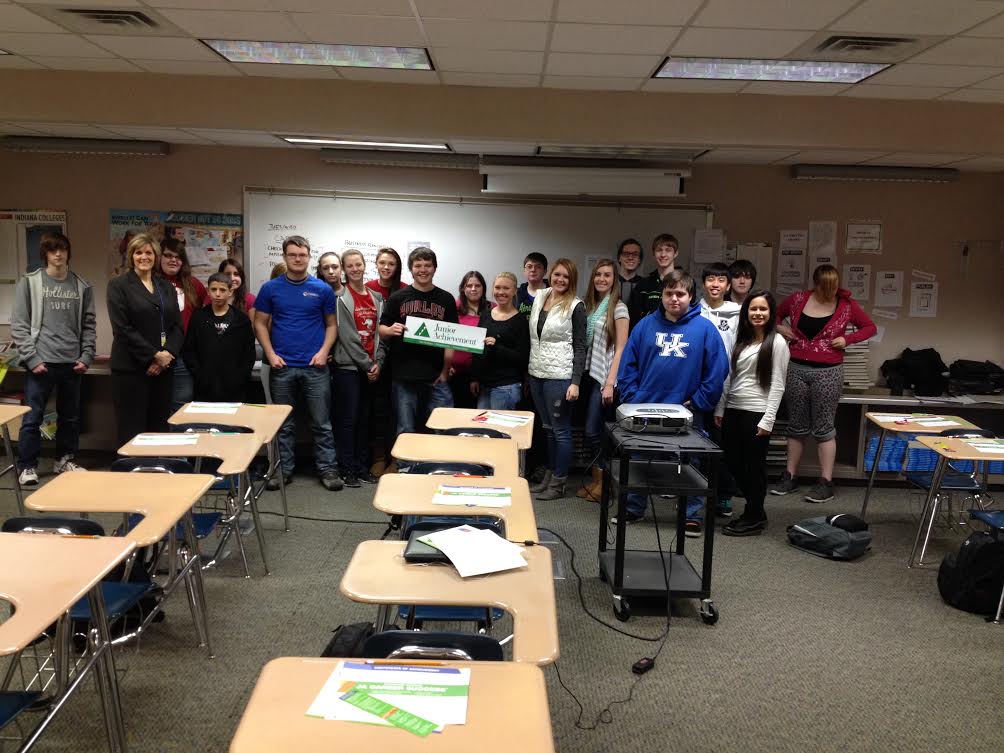
SH: I taught Junior Achievement for more than 10 years, and I used to tell the students that if you would have asked me when I was a student, I would have never believed that I would be where I am today.
Think about the choices you make that can affect you in your future. Just because you’re born into a situation doesn’t mean you have to stay there. You have options.
IFW: It sounds like your own childhood inspired you to focus on children and students in your work as Mayor.
SH: I think it is inspired by my own childhood. I do annual tours where students come up to City Hall, and I let them sit in my chair and come into my office and see my photos. It’s just exposing them to it.
We work for the people and not vice versa.
When kids come up to me in the store, and say, ‘I know you,’ and high five me or whatever, I think that hits a warm spot in my heart.
IFW: Other than working with kids, what is something else you enjoy as Mayor?
SH: We created what’s called the Hometown Pride Award a few years ago, and we choose two homes a month in summer months, and knock on their door and put signs in their yard, and say, “You’re our Hometown Pride winner.” Then we give them gift certificates, and things like that.
It’s like the pride patrol, and the people who get the award are always so excited they were the ones chosen. I love doing that.
We want to thank the people who have always taken pride in their property, or the people who have updated their homes or done landscaping.
It pains me to see some of the properties that have declined because we do have such a beautiful old city. We’ve been here 150 years.
IFW: Speaking of homes, tell us about where you live.
SH: My husband and I live on South Oak Street in an older section of town. People laugh because I say we bought the house because of the porch. It has a big, old wraparound porch, and it’s more than 150 years old, so it has a lot of character.
Our neighbors have been there many years, and everybody looks out for each other. We all know each other.
It’s quiet, and I do like that. I feel like I live on a Norman Rockwell Americana street. When it’s nicer out, I walk to work. I’m about four blocks away.
(My family lives nearby, too.) My daughter and her husband live over in Butler, and she works at Parkview Heart Institute as a nurse. My son and his family live in Kendallville, and I have three little granddaughters.
IFW: You had a health scare recently with bone marrow cancer. Tell us about that.
SH: It’s called multiple myeloma. I was diagnosed in February 2016. I went through 14 weeks of chemo, and I was a candidate for a stem cell transplant, so I went down to IU, and the procedure was successful.
Then I came home, and I was able to go back to work in September. I just eased my way in. I have a great team of department heads who have really kept things going for me, and we just talked daily and made It work.
I do a lot of monthly follow ups and what not because there is no cure for this type of cancer. It just goes into remission.
Physically, it has changed me because I’m five inches shorter than I used to be. I fractured five vertebrae in my back.
As a Marine, I could do anything physically, and I cannot now. I’m back to walking, and I can walk about a mile, but it’s been a process to get back your abilities.
Even so, I feel so blessed to be able to walk a mile and do this job. I have no complaints.
IFW: Kendallville is enjoying the same progress that we see in cities like Fort Wayne. Tell us about some of the exciting things happening there.
SH: We’re at a historic low unemployment rate, and we’ve had projects this past year and businesses that have grown and new small businesses that have come about.
We’re always grateful for our entrepreneurs and small businesses.
We have this really quaint Klinkenberg Drugs Store on Main Street. It still has all these little drawers from when it was an apothecary. It has wood floors and a soda fountain. These young ladies who created a business called Whatchamacakes bought it. They have turned it into a space to sell baked goods.
We have That BBQ Place on Main Street now, and we have Hope Denton Photography studio. A young man bought an existing garage, and turned it into Worrell’s Automotive.
I always thank the businesses that have made investments. Kraft has been here for more than 85 years, and they put in a $3 million boiler system to keep their plant viable. That’s encouraging for us. Whenever major corporations are bought out, we get concerned. They were bought out by Hines, but we’re really grateful for the ongoing investment.
Flint and Walling is the oldest company in Kendallville, and they purchased an old empty Superior Essex building. They’re bringing 20 jobs back from Mexico, so that’s really exciting for us.
The main things are the quality of life factors that contribute to the Regional Partnership’s Road to One Million.
We all have momentum, and we’re all going in the same direction. It’s exciting.
We want to break down the barriers between northeast Indiana’s counties. We’re all working as a region. Our mayors and commissioners come together monthly. If we can keep our young people here, they’ll choose to live in small towns and start families. It’s an encouraging time for all of us I think.
Author

Related Articles
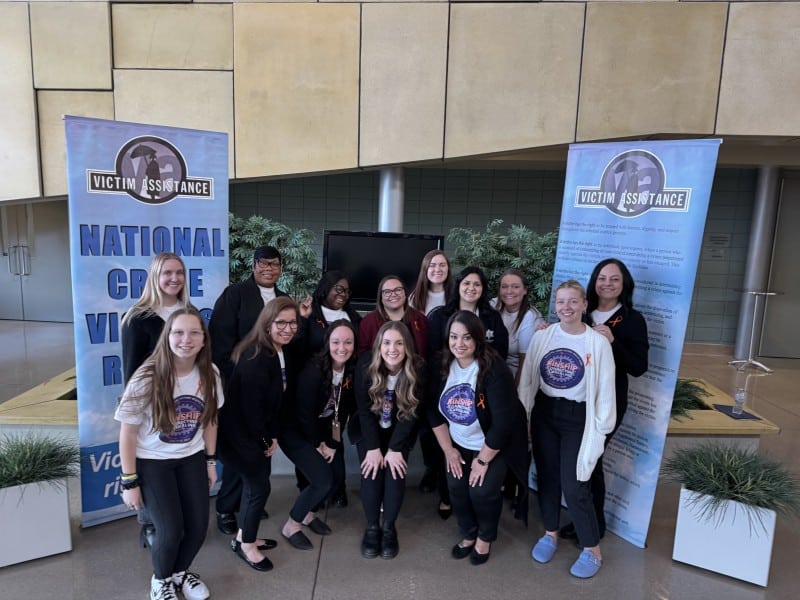
Victim Assistance: Extending safety, support, and solidarity for survivors
The Fort Wayne Police Department’s Victim Assistance program provides meaningful support for survivors and their families following a traumatic incident.
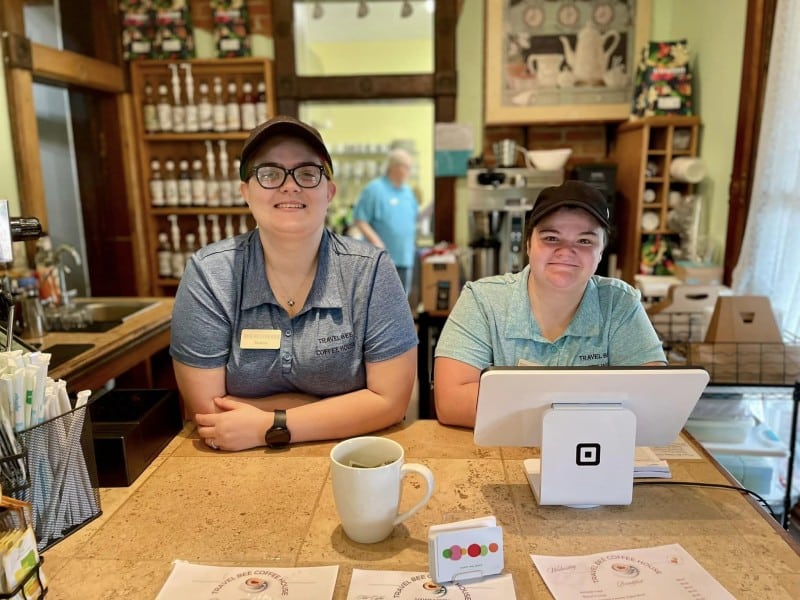
Partner Partner Content Where every cup counts: The Arc of Wabash County’s inclusive coffeehouse
Travel Bee Coffee House is creating employment opportunities and a sense of community through its connection with The Arc of Wabash County.

New platform to share ‘Common Ground’ from community ideas and solutions
Issue Media Group, a multilocal network of solutions-based, issues-focused digital publications, has launched a new national platform for increasing the reach and impact of its journalism.